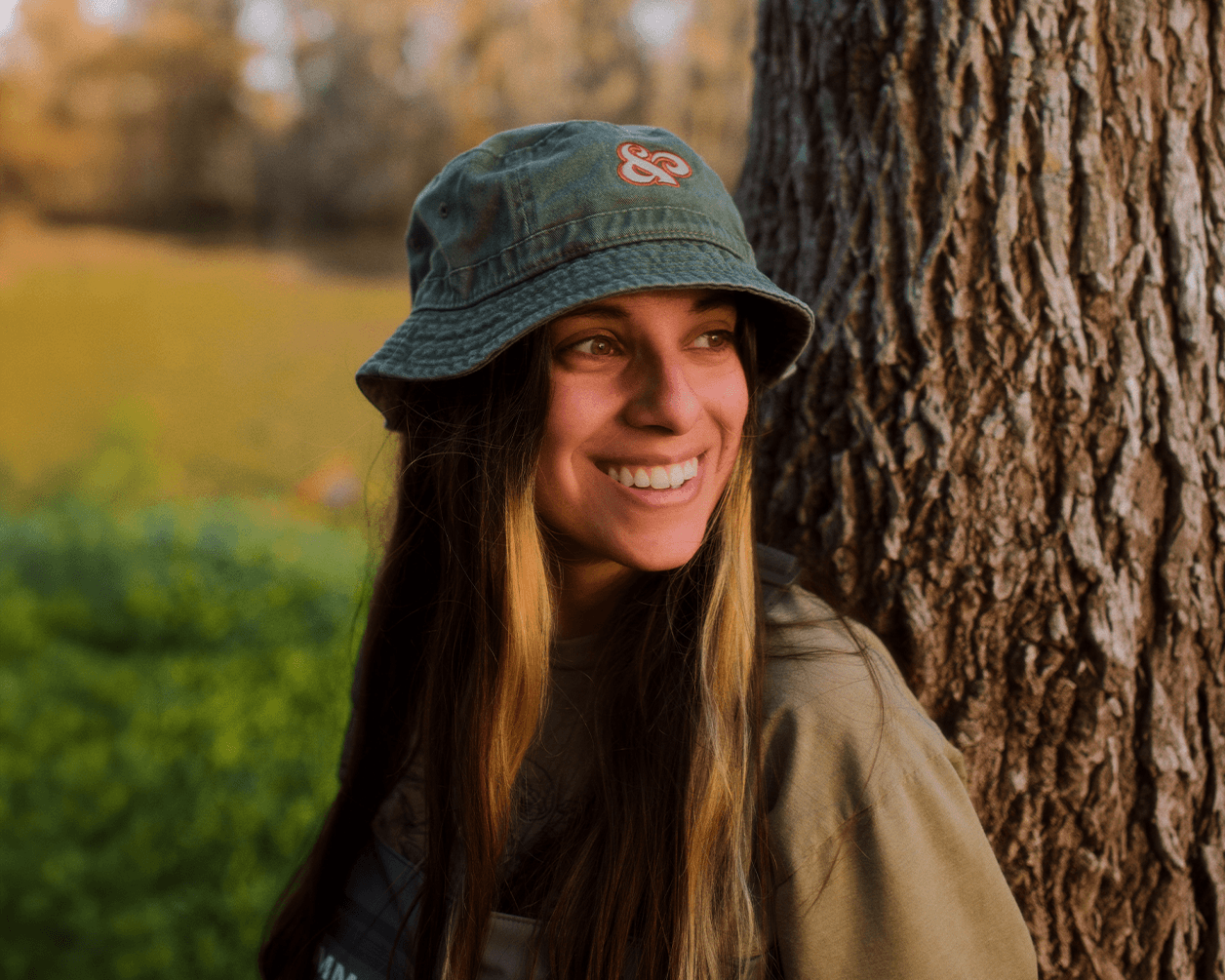
From filming nature in the Louisiana marsh to creating visuals for EDM artists, Marsh Motion’s path into the scene started with a background in filmmaking and a deep connection to the natural world. What began as experimenting with effects while editing nature footage eventually grew into a style that blends organic imagery with the energy of electronic music.
We sat down with Marsh Motion to talk about how she discovered EDM, how synesthesia and neurodivergence shape her creative process, and why the Louisiana marsh continues to influence the visuals she creates today.

In Conversation with Marsh Motion
Kat, Electric Hawk: Can you share your journey into visual art, specifically within the EDM scene? When did you realize this was the path for you?
Marsh Motion: I originally got my start in film and studied filmmaking at Full Sail University. After that, I shifted my focus to nature filmmaking, which was before I was even into EDM.
In 2021, I discovered EDM and went to my first rave at Republic NOLA in New Orleans, a popular local venue for electronic music. About two weeks later, while editing a nature film, I started experimenting with some trippy effects. It didn’t replace my love for filmmaking, that’s still at the core of what I do. It just added another layer to it. I’m still passionate about film, but now I’m equally drawn to how it can move with music and create an atmosphere you can actually feel.
Kat: When did it really click that this was something you wanted to pursue?
Marsh Motion: I feel most in a flow state when I’m creating visuals. At first, I wasn’t trying to dive too deep, just experimenting. But a few months later, my visuals were playing at Republic for the first time for Naada. Watching the crowd’s reaction, I realized just how much energy can be communicated through visuals, and that’s when it really clicked for me.
Kat: How has being neurodivergent shaped your experience in the EDM scene?
Marsh Motion: Filming and editing have been special interests of mine since I was a child. I can spend 12+ hours filming nature or editing without noticing time passing, though sometimes that backfires. It never feels like work; I get genuinely excited and watch what I’ve made over and over. It brings me an incredible amount of joy.
At the same time, the EDM scene can be extremely overstimulating. After a show, I often need months to recover, which is why I don’t VJ. I rarely get to see my visuals live, the last headline tour I worked on, I never witnessed my own work in person. Even creating visuals can become difficult when I’m burnt out. What I normally love can feel overwhelming, but deadlines don’t pause for burnout, so finding balance has been a constant challenge.
Still, this industry and this work are where I connect with people in ways that have always been difficult for me. As intense as it can be, I wouldn’t be where I am or doing what I do if I weren’t autistic. Even with the challenges, I’m grateful for the joy, the flow, and the moments of connection that make it all worthwhile. I also hope that by sharing this, others in the scene who feel similarly know they’re not alone.
Kat: How has growing up in the Louisiana marsh influenced your work?
Marsh Motion: Growing up on the water gave me a place to feel grounded and connected. Nature is a huge part of my visuals, movement in water, clouds, wildlife, and especially birds. I want my work to reconnect people to nature. The marsh is such a big part of who I am that it naturally finds its way into my art. Through my work, I want to share the beauty of Louisiana with people who may not be familiar with it.
Kat: How do you incorporate your environment into client work?
Marsh Motion: Because I filmed nature long before EDM visuals, it’s ingrained in my process. Most clients give me general direction – colors, energy, speed – but if I have creative freedom, I’ll literally go take a walk, film the canal, frogs, plants, or clouds, and then apply my effects. Nature is inseparable from my creative process.

Kat: What is your process when an artist sends you a song for visuals?
Marsh Motion: I listen to the song repeatedly with my eyes closed. I have synesthesia, so certain sounds sometimes trigger colors or patterns, which I try to incorporate. Usually, an abstract story unfolds in my mind. From there, I either film nature or build scenes in After Effects, often creating space environments from scratch. I don’t always work linearly, sometimes I start with the drop or the middle of the song and build outward.
Kat: How does storytelling factor into your visuals?
Marsh Motion: All my visuals come from what I’m personally experiencing. Take the Hideaway video, for example, it was a story of heartbreak and transition in my life. Creating it became a way for me to process and heal. Later, people reached out saying they cried during certain moments, even though they didn’t know my story. That’s when it hit me: emotional energy really does translate through visuals. It can connect with people in a way words sometimes can’t.
Kat: What has been one of the most challenging projects you’ve worked on?
Marsh Motion: ALLEYCVT was the most challenging project because of my life circumstances at the time. I had just moved into a mold-infested house, had to relocate suddenly, and was working from my dad’s living room under extreme stress. On top of that, I had to create over 20 visuals in a single week for major shows. It was exhausting, but I’m grateful I didn’t turn it down.
Creatively, the project that pushed me the most was for Mr. Wubbles. It was a fully timed, 3D narrative visual with an original character and world. Vince Brindisi and I storyboarded every moment, built an entire planet and ecosystem, and even incorporated sound design to tell the story. It stretched my directing skills further than anything else I’d done and became an incredible learning experience.
Kat: When you’re at shows, do you ever find yourself critiquing other artists’ visuals?
Marsh Motion: It usually swings one of two ways. Either I’m completely mesmerized and in awe, or I turn into the world’s biggest critic thinking, “Why did they do that? That doesn’t match the sound at all.” There’s really no in-between, and that’s not to say their work isn’t amazing, it’s just how my mind works.
Kat: How did it feel seeing your visuals for ALLEYCVT on the Lost Lands Main Stage?
Marsh Motion: It was surreal. I celebrated at home watching the livestream, even though the rain meant I only caught a minute of my visuals. Lost Lands had been one of those early “top-tier” goals I set when I first discovered EDM, even though I don’t usually listen to heavy music or attend festivals like that.
I’d already had visuals on a massive screen at Lost Lands in 2024, so I felt like, “Okay, I did Lost Lands.” I wasn’t actively chasing the main stage anymore. And then it just happened. That old goal resurfaced, and I realized I’d achieved it without forcing it.

Kat: Is that how you generally approach goals? Setting them without aggressively chasing them?
Marsh Motion: Yeah, for the most part. Some goals just live in my head and only happen years later. The ones that mean the most usually end up as a tiny, messy stick drawing on a Post-it near my desk. I don’t chase them, I just keep them in my awareness while I work.
That approach has worked before. I drew “Big Gigantic at Red Rocks” in April 2024, and by September, it happened. The goals I write down tend to show up faster.
Kat: What inspired the Interstellar visual pack?
Marsh Motion: Astronomy is one of my biggest special interests. When I combine that with visuals, it creates a kind of joy that’s hard to explain.
Those visuals were originally just for me, space scenes built from scratch. Eventually, I realized I could package the things I made purely for joy and share them. That was my first visual pack, and people connected with it because it was completely authentic.
Kat: How did your Interstellar visuals end up being used at the Concert Dome?
Marsh Motion: That was completely unexpected. I ran an ad for my Interstellar visual pack, and a VJ at the Concert Dome bought it and used it, without letting me know beforehand. The next day, he sent me videos.
Seeing my space visuals paired with a live violin was incredibly meaningful. It reminded me that I don’t want to make art only for EDM, I want my work to exist across genres. That moment affirmed that vision.
Kat: What are your goals moving forward, creatively and professionally?
Marsh Motion: I don’t want to spend time learning new software. I want to move into film. Everything I use now already lines up with that goal. This year, I’m focused on making my first short film with dialogue and actors. I’ve done music videos before, but I’ve never created a narrative with real people.
I also want to get my visuals into spaces they haven’t reached yet, collaborate with artists I’ve admired for years, and keep expanding beyond EDM.
Kat: How does where you live shape your visuals and creative process?
Marsh Motion: Where I live really becomes my muse. In Colorado, my visuals were all mountains; in Arizona, they were cacti. But nowhere have I felt as connected to my work as I do in Louisiana.
The marsh is different. There’s something here I don’t feel anywhere else, and I didn’t fully realize that until this conversation. That’s why I moved back. I use what’s around me, and here, the connection runs deeper.
Kat: If there’s one thing you want people to take away from your work, what is it?
Marsh Motion: I want people to feel a connection with nature. Even if they don’t notice it at first, my visuals invite them into that space to pause, breathe, and experience the world around them in a new way.
Kat: What advice would you give to artists trying to find their own style?
Marsh Motion: I struggled for years comparing my work to others and thinking no one would want my style. Eventually, people started reaching out specifically for it. My advice is to create from what you genuinely love. Whether that’s nature, cars, or anything else. There’s an audience for authenticity. Your work isn’t supposed to look like everyone else’s.

Keep Up With Marsh Motion
Instagram | Website
Stay in touch with Electric Hawk & all our coverage
Twitter | Facebook | Instagram | Twitch | Radio Show
Looking for new music? Keep up with our weekly Spotify Playlist, Fresh Hunts. Updated every Friday with all the latest releases. Whether it’s the newest drops from all your favorite artists, some old-school, or underground… we want you to hear it.