
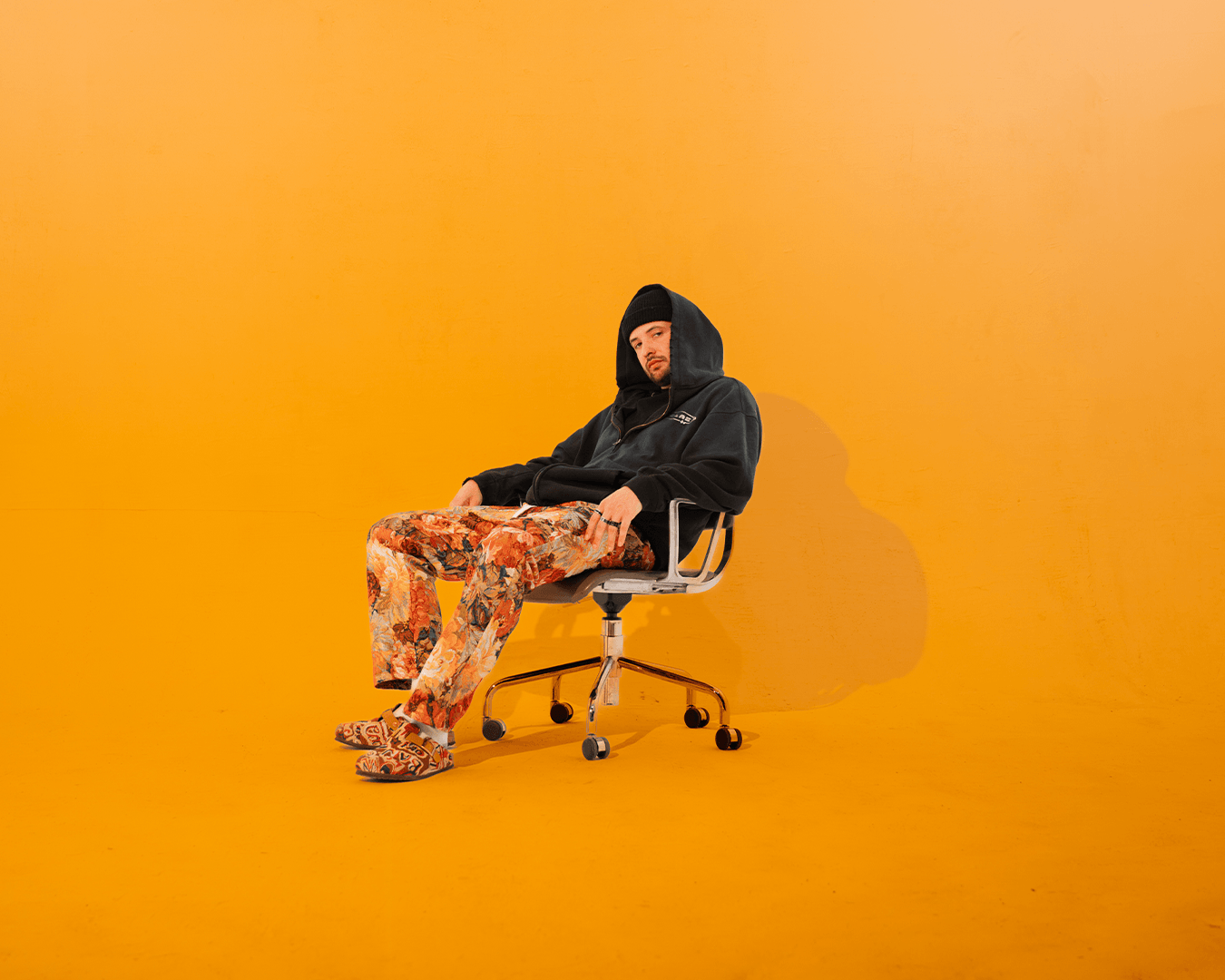
Somewhere between deep grooves, seductive basslines, and meticulously crafted production, PANDO! discovered a sound he aptly calls: “Sexy Bass Music.”
But the story behind it goes far beyond the speakers. It’s not about being the heaviest song in the rotation—it’s about knowing when to hold back, leave space for mystery, and create something that makes people want to lean in. That mentality has become central to PANDO!’s evolution as a producer, and perhaps, (more importantly) as a person.
After years of chasing validation and confronting patterns that weren’t serving him, PANDO! found himself at a crossroads: keep feeding the cycle, or start building something different. The result is an artist project that launched a personal transformation. With a growing presence in Denver’s underground, major releases on the horizon, and his upcoming EP The Invisible Network, PANDO! sat down with us to talk about the experiences that shaped his sound, the people and places that continue to inspire him, and how creating music ultimately became a catalyst for rebuilding himself.

Catching Up With PANDO!
Reagan Kelly: You’ve described your music as “Sexy Bass Music,” which is such an immediately intriguing phrase. Beyond being a clever label, what does “Sexy Bass Music” actually mean to you from both a production standpoint and an emotional one? What makes a record feel “sexy” instead of simply heavy?
PANDO!: People always assume it means sensual, but to me it’s really about confidence. Sexy music doesn’t have to scream. It knows exactly what it is. I love records that make you lean in instead of jump back. There’s restraint, groove, and just enough mystery to keep people guessing. Some of my favorite songs aren’t the loudest ones. They’re the ones that leave space for your imagination.
RK: You’ve spoken openly about some of your hardships like addiction, validation, and patterns that eventually you deemed unsustainable. Was there a defining moment where you knew something had to change?
PANDO!: I don’t think it was one moment. It was more like death by a thousand paper cuts. My addiction wasn’t always to substances. Sometimes it was validation. Sometimes it was attention. Sometimes it was the feeling of being wanted or admired. I became really good at justifying my decisions because I could always convince myself they were necessary. Looking back, I can see that I was constantly trying to fill something inside of me with things outside of me, and nothing ever lasted. Therapy forced me to stop asking, ‘Why is this happening to me?’ and start asking, ‘Why do I keep creating these situations?’ That question changed my life because it put the responsibility back in my hands. That’s when growth stopped being something I talked about and became something I actually practiced.

RK: You’ve described PANDO! as something that started because you needed to become a better version of yourself. As your career takes off, how do you make sure you’re still building the life that inspired the music instead of letting the music become another thing that consumes you?
PANDO!: I protect the parts of my life that have nothing to do with music. My relationships, my health, my career outside of music, and the little routines that keep me grounded. Those things aren’t distractions from being an artist. They’re what make me an interesting artist in the first place. If all I ever did was sit in the studio, eventually I’d run out of things worth saying. The best music usually comes from actually living life instead of constantly trying to write about it.
RK: PANDO! wasn’t something you planned, it became something you needed. Looking back now, do you think you created the project, or did the project end up creating a new version of you?
PANDO!: I definitely thought I was creating an artist project. Looking back, it ended up becoming a blueprint for the person I wanted to become. Every time I wanted the project to reach another level, it exposed another part of myself that still needed work. Whether that was discipline, patience, humility, or consistency, the music always demanded more from me first. I don’t think I would’ve become this version of myself without it. It’s funny because I started by building a brand, and somehow it ended up rebuilding me.
RK: When people claim to “reinvent themselves,” it often sounds intentional. Your story feels different, almost like survival. What parts of yourself had to die for this version of you to exist?
PANDO!: The version of me that viewed people through the lens of what they could provide for me. Whether it was validation, opportunities, comfort, or simply avoiding loneliness, I wasn’t always showing up in relationships for the right reasons for people or myself. There were times where I manipulated situations because I was afraid of losing control or not getting what I wanted. I don’t think I was waking up trying to hurt people, but intent doesn’t erase impact. That was a difficult truth to sit with. Real growth started when I stopped defending my past and started taking responsibility for it. I still have things I’m working on, but today I try to approach every relationship by asking what I can contribute instead of what I can receive.
RK: How has your producing style evolved as you’ve stepped into a healthier lifestyle?
PANDO!: I’m way less interested in impressing producers now. Earlier on, I’d spend hours trying to cram every trick I knew into one song because I wanted people to think I was talented. Now I spend way more time asking, ‘Does this actually make me feel something?’ Simplicity has become way harder than complexity. Every sound has to earn its place now. I think the music has become a lot more confident because I don’t feel the need to overexplain every idea.
RK: Co-Headlining and curating your own night at Black Box feels like a milestone not just because of the venue’s reputation, but because you’ve been able to shape the entire experience yourself. How did that whole experience go for you and how did you feel after it was over?
PANDO!: Honestly, peaceful. I expected relief or excitement, but afterward I mostly felt grateful. There was a moment before my set where I looked around the room and realized I wasn’t chasing a dream anymore. I was standing inside one. It also reminded me that milestones don’t really change who you are overnight. The next morning I still had to wake up, get back to work, and keep creating. There’s something really healthy about realizing the journey doesn’t stop after one accomplishment.

RK: What do you think makes the Denver underground unique right now? Is there something happening here creatively that the rest of the country hasn’t caught onto yet?
PANDO!: Denver still feels like a city where artists genuinely root for each other. Everyone wants to grow, but I don’t feel that constant pressure to compete with everyone in the room. People share opportunities, introduce each other, and collaborate because they actually care about the scene. I think that’s why so many incredible artists have come out of here. It feels less like networking and more like building something together.
RK: You’ve spent a lot of time investing back into the Northern California and now Denver community and helping strengthen the scene around you. Why has building something locally become such an important part of your vision as an artist?
PANDO!: Because every scene today exists because somebody chose to invest in it years before anyone was paying attention. None of this happens by accident. I benefited from people giving me opportunities before I felt like I deserved them, and I think it’s important to continue that cycle. Success feels a lot more meaningful when other people get to experience it with you. At the end of my career, I’d rather be remembered for what I helped build than just the shows I played.
RK: You’ve been very candid about struggling with ego before starting this project. How do you balance believing in yourself without slipping back into that version of your ego?
PANDO!: For me, ego doesn’t usually show up as arrogance. It shows up in much quieter ways. It shows up when I start believing my needs matter more than everyone else’s or when I begin justifying decisions simply because they benefit me. That’s usually my signal that I’m drifting away from the person I’m trying to become. These days I try to stay accountable to the people closest to me because they’ll tell me the truth long before the internet ever will. Confidence isn’t pretending you’ve changed. Confidence is trusting yourself enough to keep choosing the harder path even when nobody would know the difference.
RK: You mentioned that a festival completely changed your understanding of what it meant to be an artist. We’d love to hear more about that. What was it that hit you so deeply? Was it the music, the community, or something harder to explain?

PANDO!: Lightning in a Bottle 2021 completely changed my perspective on what music could be. Before that weekend, I mostly thought about music as entertainment and performance. Lightning showed me that music could actually create transformation. I watched complete strangers cry together, hug each other, dance together, and leave sets feeling lighter than when they arrived. It wasn’t because somebody played the perfect song. It was because those artists created an environment where people felt safe enough to experience real emotion. That completely changed the way I approached writing music. Ever since then, I’ve stopped asking myself, ‘Is this cool?’ and started asking, ‘Will someone actually feel something when they hear this?’ That’s become the foundation for almost every record I make now.
RK: PANDO! seems more like a philosophy than an alias. What does that name represent to you today?
PANDO!: PANDO! started as an artist project, but it’s also my last name. Over time, it became something much bigger. It became a commitment I made to myself. Pando is also one of the largest living organisms on Earth. What looks like thousands of individual trees is actually one connected forest, all sharing the same root system beneath the surface. That idea has always resonated with me. It’s a reminder that I don’t have to keep repeating the same cycles just because they’re familiar.
Every experience, every relationship, and every setback shapes who we become, even when no one else can see it. The real project has been learning how to become someone with integrity, both on and off the stage. Every release captures a different season of that journey. If someone connects with my music, that’s incredible. But if my story helps someone believe they are not trapped by who they used to be, that might be what I’m most proud of. That idea is at the heart of my debut EP, The Invisible Network. It’s about the unseen connections that shape our lives and the quiet ways we grow together, even when we cannot see the roots beneath us.
RK: Dream collab artist?
PANDO!: If we’re talking dream collaborations with no limitations, it has to be CharlesTheFirst. His music completely changed the trajectory of my life as both a producer and a listener. Looking at artists creating today, I’d absolutely love to work with Mfinity, Chmura, Phurn, Skysia, Of The Trees, or Supertask. Every one of those artists has found a unique emotional voice while still pushing sound design forward. I think the best collaborations happen when two different perspectives create something neither person could have made alone.
RK: Dream festival?
PANDO!: I’d have to say Shambhala. Every artist I know who’s played it talks about it like it’s a life-changing experience instead of just another festival booking. It feels like one of the few places where the music is still the main character and the culture has stayed true to itself over the years. That kind of integrity is really inspiring. Envision is a close second because it blends music, art, nature, and wellness into one experience. As I’ve gotten older, those are the kinds of environments I’m naturally drawn toward.
RK: Looking ahead: what’s next for you?
PANDO!: So much… The biggest focus right now is releasing the strongest music I’ve ever made. I have releases coming with Monstercat that I’m incredibly excited for, and I’m also finishing my next EP, The Invisible Network, which feels like the clearest representation of who I am as an artist today. Every song on that project is connected by a bigger idea, so it feels more like one complete journey than a collection of tracks. I’m really interested in creating bodies of work that people come back to years later, not just songs that have a good month online. My goal has never been to chase trends. It’s to make music that still feels honest long after it’s released.
I’ll also be returning to Same Same But Different this year, which is honestly one of my favorite festivals in the world. This time I’ll be kicking off the entire weekend by playing the official pre-party, and I can’t think of a better way to start it.
More than anything, I’m excited to keep building this project with all of you. It feels like we’re just getting started!

Keep Up with PANDO!
Spotify | SoundCloud | Instagram
Stay in touch with Electric Hawk & all our coverage
Twitter | Facebook | Instagram | Twitch | Radio Show
Love discovering new music? Subscribe to Hawk Talk for exclusive interviews, fresh music recommendations, festival coverage, and behind-the-scenes stories delivered every other week. Plus, subscribers get first access to special community perks, giveaways, and exclusive content!
Looking for new music? Keep up with our weekly Spotify Playlist, Fresh Hunts. Updated every Friday with all the latest releases. Whether it’s the newest drops from all your favorite artists, some old-school, or underground…we just want you to hear it.


