On his most personal project to date, Colorado producer Baclash transforms years of self-doubt, healing, and creative rediscovery into a five-track journey that finds beauty in life’s wreckage. Daisies & Debris, releasing through Alison Wonderland’s FMU Records, marks more than a career milestone, it signals the arrival of an artist who has finally learned to trust his own voice.
In this exclusive conversation, Baclash opens up about the vulnerable road behind the record, finding validation without compromising his vision, collaborating with the people who helped shape the project, and why bringing Daisies & Debris to life through an immersive Denver release show alongside Maybe Forever felt just as important as releasing the music itself.

“From the moment I heard these records, I knew there was something really special about Baclash. Daisies & Debris is so honest and vulnerable, and beautifully captures the complexity of working through depression, addiction, and self-doubt. Supporting artists who have a clear vision and something meaningful to say is a huge part of why I started FMU Records. I can’t wait for people to experience it.”
Alison Wonderland
Listen to Daisies & Debris below while you read Baclash’s exclusive interview!
In Conversation with Baclash
seradopa: It’s been some time since your debut EP. Looking back at who you were during that chapter compared to who you are today, what changed enough that you knew it was time to create another body of work?
Baclash: Yeah, it’s been over two years since my first EP, and honestly, that entire stretch was me figuring out what Baclash is. I’ve always wanted this to be a project-based artist identity, not just a singles project. I wrote Daisies & Debris because I finally understood that direction clearly enough to commit to it. It was about taking everything I had in my head, bringing it into the world, and drawing a line that I could continue building from.
seradopa: You described Daisies & Debris as a project you ultimately made for yourself. Was there a specific moment when you stopped worrying about how people would receive the music and simply started making the record you needed to hear?
Baclash: For sure. I started revisiting a lot of my favorite music from around 2017 to 2019—old What So Not, Krane, Ekali, Slumberjack, and, funny enough, Alison Wonderland. I really wanted to bring that sound into 2026.
That era hit a sweet spot that I hadn’t heard in a while: melodic and euphoric, but still hard enough to move a crowd. Digging back into those records, that combination of emotion and energy was exactly what I wanted to build this project around.

seradopa: The title Daisies & Debris immediately paints a contrast between beauty and destruction. What does that balance represent for you personally, and how did it become the perfect name for this chapter?
Baclash: Listening back to that music from that era brought up a lot of emotions from that time in my life, when I was deep in addiction and found a real escape in that style of music.
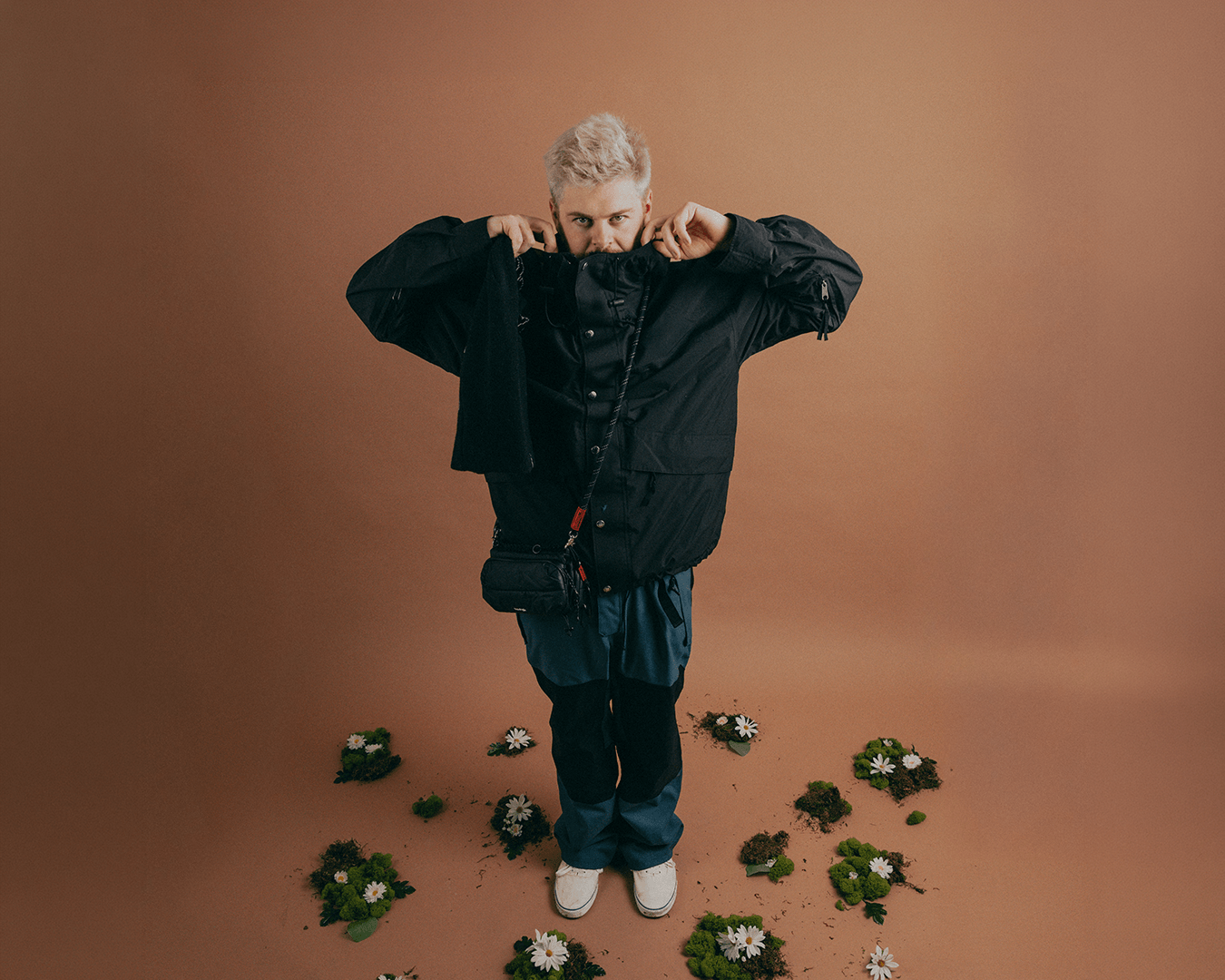
Daisies & Debris is essentially a story of rebirth after a storm. You can look at it through the lens of addiction and coming out the other side of it. The imagery behind the title became something I kept thinking about throughout the entire writing process.
seradopa: Creating a project this personal usually means confronting parts of yourself you’d rather avoid. What was the hardest truth you had to confront while making this EP?
Baclash: The hardest truth was realizing that I have a hard time trusting myself.
I knew exactly what I wanted this project to sound like, and most people I showed it to connected with it. But every once in a while, someone would say it sounded dated, and I’d start questioning myself.
That was kind of the entire point of the EP, though. It came down to trusting my own vision, which is something I’ve always struggled with. Honestly, I didn’t think it would get much attention. I thought it might just be something I made for myself.
Then the project got signed, and that was incredibly validating. It showed me that following my instincts was the right decision.
seradopa: If your debut EP was introducing people to Baclash, what do you hope this sophomore project teaches listeners about who you’ve become since then?
Baclash: What I really hope people take away from this project is the songwriting. I wanted to bring something fresh to a sound that feels half modern and half nostalgic.
More than anything, I hope it pulls people into the world I see in my head when I’m creating this music.
seradopa: Even though this is your most personal project to date, you invited close friends like Elluminate, rSun, and Harrison Clayton into that space. What made each of them the right people to help tell this story?
Baclash: Working with all three of them on this was amazing.
With rSUN, we started that song before the project really became a thing. I had a couple other demos going, but the emotion he brought into the drop pulled it into the world of Daisies & Debris. If I hadn’t brought him on, I think I would’ve kept it more bass-driven, and it wouldn’t have even fit on the project.
With Elluminate, we’ve worked on a couple songs together. I had some scratch vocals on the original demo of “We’re Gonna Make It,” and from the start of writing it I knew I wanted Ellie to be the one singing on it. The vocals she sent captured everything I was trying to say with this EP, and we wrote the entire song in just two vocal sessions.
Harrison Clayton and I met on a trip I took to Saint Louis. We were talking about how we needed to work on something after I was done with the EP, since I already had vocals on all the tracks that were gonna have them. But on “Haunted,” what I had was just a vocal sample from Splice. Then he sent me some of his tracks that were about to come out, and I was like, damn, he’s so good. And I was like, wait why am I not putting him on “Haunted”? He sent me back the new vocals, and I literally reworked the entire song around them. It came out so good.

seradopa: Releasing Daisies & Debris through FMU Records is a huge milestone. Can you take us back to the moment you found out the project would be coming out on Alison Wonderland’s label? What was running through your head?
Baclash: Getting the project signed to FMU was so crazy. Like I said, I wrote this thinking it was really just gonna be for me and that was it. The fact that Alison signed it is pretty telling of what I was going for, since it was the era she first came up in. It felt so full circle.
seradopa: Beyond the excitement of the announcement, what did having FMU believe in this project mean for your confidence as an artist? Did it validate something you had already begun believing in yourself, or did it change the way you viewed your own music?
Baclash: Having a single signed to a label like FMU is already cool enough, but getting the whole EP signed was the confidence boost I feel like I needed at this point in my career. It didn’t necessarily change what I believed in my music. It more made me confident in how other people are perceiving me. I think we need to get back to artists putting out projects, and it’s definitely harder to do that now than ever. So having FMU put resources behind Daisies & Debris and let me share my vision unchanged has made me fall in love with the scene again.
seradopa: Instead of simply releasing the EP, you’re celebrating it with a dedicated release show in Denver alongside Maybe Forever. Why did it feel important for this chapter to exist as a shared experience instead of just a digital release?
Baclash: Honestly, it’s because I wanted to experience it live. This whole project has been written off one idea. What do I want to hear? So for the show, I wanted it to feel like everything I want when I go to a show myself. My favorite promoters in Denver for years now have been Maybe Forever. Jordan has brought so many dope artists to Denver who don’t usually get the chance to play here, and he’s done so much for the culture of this city, for real. I knew that if I could create what I imagined in my head, people would love it, and the only crew I knew that could pull that off was Maybe Forever.

seradopa: You’re not only performing that night, but you’re also curating the lineup. What made these specific artists perfect for helping shape the world of Daisies & Debris?
Baclash: So to start off, we have DJ Garth, who, for those who don’t know, is Alison’s manager and helps run FMU. Garth, and shout out to Tracy, have been putting in so much work on this EP. He’s already played Red Rocks, and with everything he’s done behind the scenes here, I knew we needed him on the show.
Then we’ve got Ana, aka My Friend Ana, who played Maybe Forever last year. I already knew her since she does a lot of media with Alison, but I’d never seen her live, and her set was so sick. Talking with her, I realized she’d fit this slot perfectly, and it keeps with the whole theme of bringing in people who’ve been part of this EP. Gotta give a shout to the entire FMU team.
And then we’ve got my boy Silkrow on this. Honestly, I didn’t know if he’d be down, but I randomly asked and he was so enthusiastic about it. Silkrow’s one of the most goated producers of our generation. I’ve got like three of his songs in my set that I think I’m still gonna play even though he’ll have just played them himself. And Jack is one of my besties out here, so having him on the show is very, very special.
seradopa: Without giving away too many surprises, what can fans expect when they walk into the room that night?
Baclash: What you can expect is an immersive experience. It hopefully really brings you into the world of baclash and specifically Daisies & Debris. I want it to feel different, and it’s helping move the culture of our scene forward. I think doing “special” shows like these was always so cool to get to go to when I was younger. And I just hope it gets people talking and coming up with their own original ideas.
seradopa: Every project leaves behind a version of ourselves. Now that Daisies & Debris is ready to meet the world, what version of Baclash are you leaving behind, and who do you hope to become next?
Baclash: The version of Baclash I’m hoping to leave behind is the one full of self-doubt. I’ve been making music long enough to know I can trust my vision, and this whole project is hopefully proof to future me that I don’t need to dwell on whether people will get it or if I’m doing the right thing. Ultimately, we create art for ourselves. So the person I’m trying to become next is the one who really does their own thing. Not on my own, but in my own way.
seradopa: This chapter feels like both a milestone and a turning point. As you look beyond this release, what’s the part of your future that genuinely excites you the most, not necessarily the biggest goal, but the thing that keeps you inspired to keep creating?
Baclash: What has me super, super excited is building on the world I’ve started to create with this EP. I have so many ideas for it, visually and sonically, and I’ve honestly already started writing a bunch of music that could be the follow-up, though I’m not necessarily trying to rush it. Right now I just feel inspired, whereas last time, by the time the EP came out, I was pretty burnt out. With this one, it really feels like the start of the next chapter, and I’m ready for it to begin.

Keep Up with Baclash
Spotify | Soundcloud | Instagram
Stay in touch with Electric Hawk & all our coverage
Twitter | Facebook | Instagram | Twitch | Radio Show
Looking for new music? Keep up with our weekly Spotify Playlist, Fresh Hunts. Updated every Friday with all the latest releases. Whether it’s the newest drops from Baclash, all your favorite artists, some old-school, or underground…we just want you to hear it.