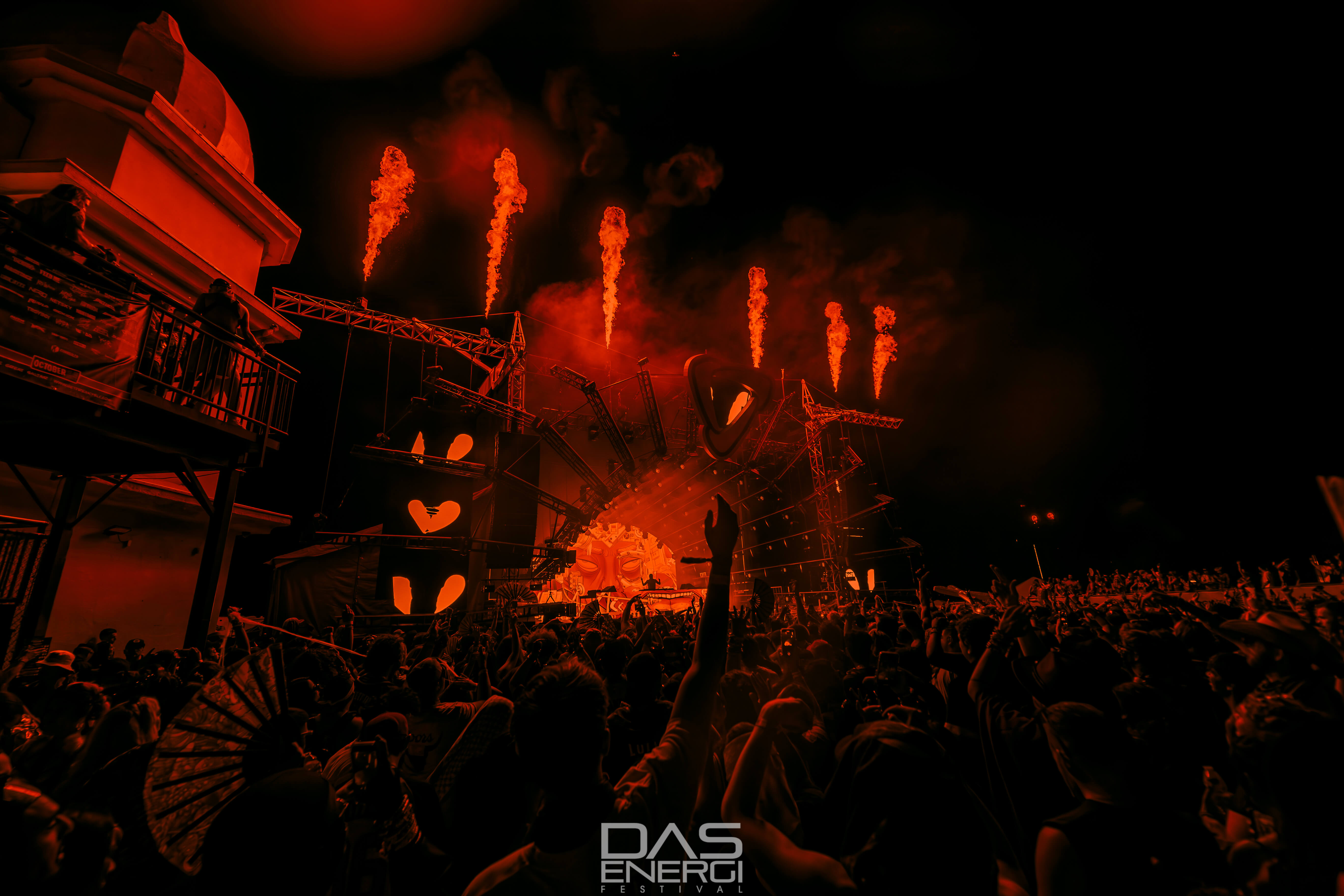
Throughout the past few years, especially since returning to festivals after the COVID era, the market for festivals has flourished, but there have been some downfalls. As attendees, we have subconsciously noticed a shift in how festivals have been changing. Without hesitation, we see a growing discourse. Whether that be from factors like the lineup and experience, or corporations making a mark on the bigger festivals we know and love. Although we see and experience so much as attendees and fans, we don’t commonly see what is happening behind the scenes. That’s where Courtney Coles educates us about what we may not know about the festival market.
Luckily, we got the opportunity to chat with veteran and a beloved voice in the industry, Courtney Coles from V2 Presents, to give Electric Hawk and our readers some insider festival insights. We get a chance to understand the behind-the-scenes of festival booking, the trends of how festivals operate, and predictions on where the festival market is going. Take a read on what Courtney Coles has to share with us!
Get to know Courtney Coles

Hi Electric Hawk! I’m Courtney Coles, or Courtney Ceecee if you follow me on Twitter. I live in Salt Lake City, Utah, and I work for V2 Presents. V2 is an independent concert and festival promoter; we produce Das Energi Festival, Get Freaky Festival, Get Lucky Festival, and more. My official title is Marketing Director.
I handle all of our brands’ social media, customer service, festival staff, front gate entry, VIP, guest services, and more at V2 events. We are a small business, so I wear many, many hats. I’ve worked in live music events for over 13 years and have made music festivals my entire life.
In Conversation with Courtney Coles
seradopa: There has been a lot of recent talk about the direction of festivals – what do you believe has been the main reason why the festival bubble seems to be reaching a burst or plateauing currently?
Courtney Coles: This is a great question, and I think many factors contribute to the current state of the music festival industry. Two main reasons are the over-saturation of events and our economic state. Over the last 10 years, the popularity of music festivals has expanded exponentially, leading to more festivals popping up, especially in the EDM world. The number of music festivals every summer is wild, with tours, one-off shows, branded events, and festivals all competing.
Add to that the state of the industry since returning from the pandemic. Supply chain issues, the rise in gas costs, and other factors caused this, so before we even start booking artists, our costs have gone up an average of 30-40%. Artist fees (some well-deserved) have skyrocketed, making the cost to produce a music festival almost double in some cases. This is daunting and risky, with tight profit margins making investors and promoters question if all the work is worth it.
Promoters aren’t the only ones feeling the pain; our attendees are too. Attending a music festival can be a significant investment, between tickets, hotels, Ubers, drinks, and the need for a new outfit for every show (I am the most guilty of this). Attendees are making hard decisions about which festivals to attend, creating a perfect storm of hurdles for the industry.

seradopa: What seems to be a misconception the general public doesn’t understand when booking and running a festival? For example: festivals “want to cancel a day to save money” when in reality, that is not the case.
Courtney Coles: Oh, I love this question. I could go on and on!
One of the biggest misconceptions the general public has is how festivals are booked. People look at lineups and usually judge harshly, thinking a festival booking team just decides on a lineup they want: this headliner, this support, this support, and voilà; a festival lineup. But that’s far from what actually happens. If it were that simple, every festival would sell out and be perfectly curated.

In reality, the booking process involves sending out offers and dealing with artists’ teams. Artists might not be available for the dates you want, they might be out of the country, or already booked. If they are available, then negotiations begin. Sometimes, the artist just isn’t within budget. Billing can also cause issues. The placement on the lineup, logo size, and who plays before/after them are all critical factors for artist teams.
The curation of lineups and why you see the same headliners or lineups throughout a season is another misconception. I did a Twitter thread about this that explains it better, but there are limited ‘headline’ level acts in any genre of music festivals. There aren’t many acts that can pull the big numbers needed for a headline act. So then you see a lot of the same headliners on festival lineups.
seradopa: You’ve mentioned that festivals are going to start becoming creative with their lineups moving forward. Can you expand on your thoughts and feelings about that?
Courtney Coles: I think this for a couple of reasons. One is that the new generation of kids buying tickets is different from the generations before. With TikTok and social media influencing how we consume and discover music, promoters have to stay relevant by judging an artist’s value based on their social presence. Another huge issue is artist fees. The cost to book a headliner act for a music festival would honestly blow some readers’ minds. Not every DJ on the lineup asks for those numbers, and sometimes those numbers are well-deserved. The big names pull in more, causing the next DJ on that agent’s roster to think they deserve more too.
Promoters are making tough decisions between booking a big headliner with a light support lineup or a lineup of all evenly rated mid-tier DJs. While some massive festivals can afford stacked lineups with headliner-level acts all day and night, independent festivals with lower capacity or smaller markets face challenges when an artist asks for high rates.
seradopa: Electronic Music is vastly different when it comes to the other genres when booking acts. At least in the Denver market, there is a chance you can see a singular artist 3 to 5 times in the same year plus potentially see them at a festival or curated event. Do you believe artists are beginning to oversaturate themselves in certain markets?
Courtney Coles: There is an over-saturation happening. We deal with this in Salt Lake City, a bass-driven market that sees the same bass acts multiple times a year. This is more common in electronic music because bands generally take time to write music, release projects, and tour. DJs, however, are constantly writing music, touring, and playing festivals.
For some acts, this isn’t a problem because their fans are die-hard and don’t mind seeing them multiple times a year. But for others, it can be an issue. If an act plays a festival and then comes back for a tour, the tour can suffer if they don’t have that die-hard fan base and reach.
seradopa: Or maybe this is more at fault with the agents than the artists themselves?
Courtney Coles: As for who’s at fault, it’s hard to say. The goals of the artist or their agents can vary. Some artists need to play more shows to survive, while others and their agents are pickier about the shows they take, creating demand. It’s also tough for a promoter to say no to a show from an artist they like or have history with, so really, everyone is to blame.
seradopa: I’ve noticed at least in the underground crowd that people are leaning more towards curated events + independent festivals over the past few years.
What are your thoughts on the crowd shifting their focus on these kinds of events rather than the bigger scale ones? Just want to hear your thoughts and feelings on this side of the festival market.
Courtney Coles: Yeah, there’s a trend of starting with mainstream events and then transitioning to curated, “boutique,” and local events. Nowadays, the option to attend these types of shows is easily available, which wasn’t always the case. There are so many small and local promoters and collectives, at least in Salt Lake City, and they’re all doing amazing things. On any given weekend, you can find a good DJ playing the type of music you like!
Beyond the boom in these types of events, people also crave community, especially after being in the scene for a while. Many want to start giving back or participating on a more involved level, which is easier with a grassroots promoter. People want the community found at more curated events. It’s your type of people, from your community, listening to the music you like. We always do Zeds Dead and Excision curated events in Salt Lake City, and the crowds feel like friends all hanging out.
seradopa: It appears festivals from all different scales are shifting. We noticed it with the rebrand of Summer Camp and more recently with Life is Beautiful, do you think these shifts are going to help keep afloat some of these festivals from hitting the graveyard or do you believe there needs to be better re-evaluation on running these festivals?
Courtney Coles: Oh, I really love the rebrand and relaunch of both of these festivals. I have attended Life Is Beautiful a couple of times and adored the festival. I was pretty worried when their socials were so quiet this year. They were very pragmatic in this decision. I don’t know the inner workings, but if you’re not making money one way, being able to shift to a new model instead of calling it quits is impressive. I hope it’s a long-term plan where they scale back for a couple of years and come back to their full glory.
Everything comes in waves, and the festival industry is no different. We are in a lull, but it’ll come back. I know some people will say they’d rather have no festival than a scaled-back version, but sometimes you have to scale back to get things back on track—a reboot, if you will. Here’s hoping that’s where these two festivals are at.
seradopa: What do you think the patrons want to experience more than ever while attending festivals?

Courtney Coles: This is such a good question because the wants of festival fans have changed so much! Beyond the demand for bigger lineups and bigger production, one big change is the demand for attention to their experience. They want their experience nurtured by the promoter from before the festival starts until they travel home. Pre-show, attendees want information and details like set times and maps. Inside the festival, they want seamless entry processes, convenient bathrooms, and water stations. They want well-thought-out stage lineups for crowd control and flow throughout the festival. All these little things have a huge effect on an attendee’s experience.
Festivals are being held to a higher standard because of this, and they should be. No one wants to pay all this money and have a hard time finding a bathroom or getting water. They want to dance and be carefree. The best festivals make you feel cared for through the little details, and festival attendees want and appreciate this.
seradopa: You have mentioned you feel a potential renaissance is coming within the festival market. What gives you the feeling, what does that renaissance look like, and how long do you think until we reach that point?
Courtney Coles: I do believe nightlife in general is going to have a renaissance, and music festivals especially. People are craving community. Social media gives the illusion of community, but it can also be isolating. Dance floors are anything but isolating. If we can combine social media communities with music festival culture, the next era will really flourish!
The desire for more curated local events is also why the nightlife renaissance will happen. When you feel a connection to an event on a deeper level, it’s like this is my city, and these are people I live next door to producing this party. We hear it all the time from people attending Das Energi from out of state. They always comment on the feeling of community. They meet new people, trade Kandi, and believe in PLUR values—all things directly affected by our attendees. You don’t always find it at a massive mainstream festival.
Additionally, veteran promoters have laid the groundwork for smaller promoters and new festivals to be created and really flourish. They have paved the way, pushed through the red tape, and now we can focus on details and making festivals even more special. It’s going to be really cool to see what new ideas pop up in the industry in the coming years. The future looks bright, and I’m excited to be part of this evolving landscape.

Stay connected with Courtney Coles:
Instagram | Twitter
Stay connected with V2 Presents:
Instagram | Twitter | Facebook | Website
Stay in touch with Electric Hawk & all our coverage
Twitter | Facebook | Instagram | Twitch | Radio Show
Looking for new music? Keep up with our weekly Spotify Playlist, Fresh Hunts. Updated every Friday with all the latest releases. Whether it’s the newest drops from all your favorite artists, some old-school, or underground… we want you to hear it.